
Versailles casino Gates of Olympus
Introduction: why Gates of Olympus keeps showing up on players’ radar
When I look at the modern lineup of high-volatility online slots, Gates of Olympus is one of the clearest examples of a title that built its reputation not just on branding, but on how it behaves in real play. On the Versailles casino Gates of Olympus page, the slot naturally attracts attention because it combines a simple layout with a payout model that can swing hard in either direction. That combination is exactly why so many players are curious about it.
At first glance, the game looks straightforward: a Zeus theme, bright symbols, large multipliers, and an obvious promise of big moments. But the real story is deeper than the visuals. What matters is how the tumble system works, how multipliers are applied, how often the base game can feel quiet, and why the bonus checks before using Versailles Casino round creates most of the slot’s identity.
That is the key practical point. Gates of Olympus is not a slot you choose for steady, low-stress entertainment. It is a title built around uneven rhythm, occasional dead stretches, and the possibility of sudden explosive returns. For some players, that makes it highly engaging. For others, it can feel too erratic. If you are considering playing Gates of Olympus at Versailles casino, the useful question is not whether the slot is famous. The useful question is what kind of session this game actually creates.
What Gates of Olympus is and why it became such a standout release
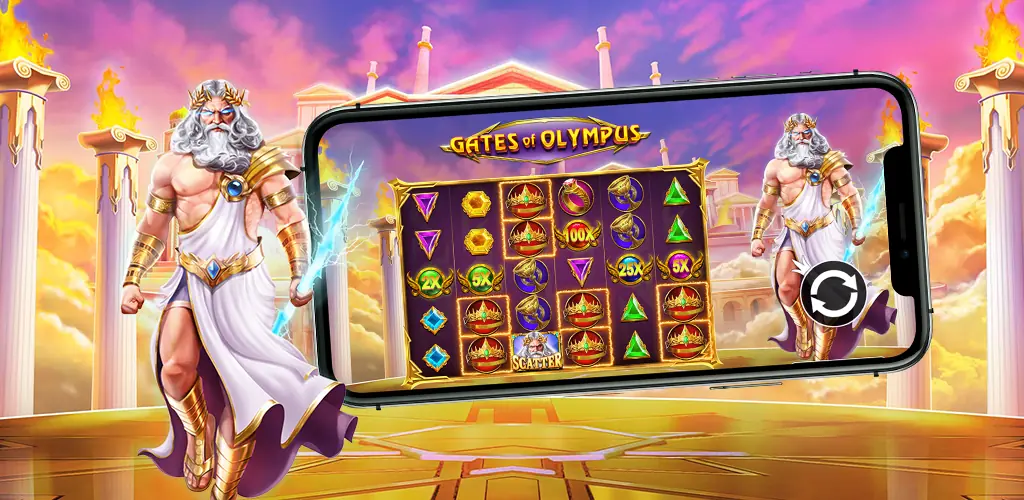
Developed by Pragmatic Play, Gates of Olympus is a 6x5 video slot with a cluster-style payout structure based on symbol counts rather than fixed paylines. Instead of lining up matching icons across traditional rows, players need enough matching symbols anywhere on the grid to trigger a paying combination. Wins are then removed through the tumble mechanic, allowing new symbols to fall into place within the same spin.
That design matters because it changes the emotional pace of the session. In a classic payline slot, a spin often resolves instantly. Here, one spin can continue through several cascades, and that creates suspense even when the initial screen looks average. The game also uses a mythology theme centred on Zeus, but in practice the visual package is not the main reason for its staying power. The real hook is the multiplier model. If bonuses are what you care about, current Versailles Casino chicken road information for online casino players breaks down every offer currently running.
Zeus can drop random multipliers during both the base game and free spins. In the base game, those multipliers only pay if they land during a winning sequence and the tumble chain continues. In free spins, all multipliers that appear during a single bonus spin are collected and added together, then applied to the total payout from that spin. This single rule is a major reason the slot became so visible in streaming culture and on casino game pages: one spin can suddenly turn from ordinary to massive.
There is another reason the title became so noticeable. It creates a very specific illusion of generosity. The screen is busy, tumbles happen often enough to keep attention, and multipliers flash in dramatic fashion. Yet the actual value of those moments can vary sharply. In other words, the slot often looks hotter than it really is until the right symbol count and multiplier timing finally connect. That contrast between visual intensity and actual return is one of the most important things to understand before playing.
How the core gameplay works in practice
The mechanics of Gates of Olympus are easy to describe, but their practical effect is more nuanced. The grid uses 20 symbols in total, and a payout occurs when enough matching symbols appear anywhere on the reels. Lower-value gems and premium symbols such as crowns, rings, goblets, and hourglasses all contribute to the paytable, while the scatter and multiplier symbols drive the session’s biggest moments.
Because this is a tumble slot, every winning combination disappears after it pays, and new icons drop into the empty spaces. This repeats until no new winning cluster is formed. That means one paid spin can produce several consecutive outcomes. For the player, this changes how bankroll movement feels. You may see a sequence of small hits that keep a spin alive without meaningfully changing the balance. Then, unexpectedly, one extra tumble plus a multiplier can turn the same sequence into a much stronger result.
That uneven conversion of action into value is central to the game. Gates of Olympus does not reward every active-looking spin in a meaningful way. A lot of motion on the screen does not necessarily equal a strong return. I think this is where many new players misread the slot. They see frequent tumbles and assume the game is paying well, when in reality the session can still be drifting downward.
| Core element | How it works | Why it matters to the player |
|---|---|---|
| 6x5 grid | No paylines; wins are based on symbol counts anywhere | Results feel less rigid than in traditional reel slots |
| Tumble feature | Winning symbols disappear and new ones drop in | One spin can build into a longer sequence |
| Random multipliers | Zeus can add multiplier symbols to the reels | Big returns depend heavily on timing, not just hit frequency |
| Scatter-triggered free spins | 4 or more scatters activate the bonus round | Most of the slot’s headline potential sits here |
Another practical detail is stake perception. Because the slot can go through flat stretches, bet sizing matters more here than in softer, medium-volatility releases. Players often overestimate how long a bankroll will last simply because the screen remains active. In reality, this is a title where a run of non-converting spins can drain a balance faster than the visual tempo suggests. When the support team feels slow, current Versailles Casino legality information for online casino players explains the fastest ways to reach them.
Symbols, scatters, multipliers and the bonus round explained clearly
The symbol set is not complicated, which is helpful. Lower-paying symbols are coloured gems, while premium icons include chalices, rings, hourglasses and crowns. The exact values are less important than the game’s overall hierarchy: premiums can matter, but the slot is not fundamentally built around symbol prestige. It is built around combination size plus multiplier timing.
The scatter is represented by Zeus, and landing four or more scatters anywhere on the grid awards free spins. More scatters increase the starting number of bonus spins, which can make a difference because the round is where the game’s identity really comes alive. During free spins, multiplier symbols remain on the reels only for that spin, but all multipliers that appear in the same spin are added together before being applied to the total win from that spin’s tumbles. Table game fans will get more out of this review after reading Versailles Casino no deposit bonus codes page.
That rule creates the slot’s signature volatility. A free spin can look dead for a second, then suddenly produce several tumbles, two or three multipliers, and a payout that dwarfs the rest of the session. But the reverse is just as true: a bonus round can trigger, generate noise and anticipation, and still finish with a disappointing return.
There is also a retrigger option. Additional scatters during free spins can add more bonus spins. On paper, that sounds straightforward. In practice, retriggers are one of the few ways the slot can move from a decent bonus into a genuinely memorable one, because they extend the window in which multiplier stacking can happen.
- Base game wins are often cosmetic unless a multiplier lands at the right time. This is why many spins feel busy but not transformative.
- Free spins are where expectations should be focused. The base game can contribute, but the slot’s real ceiling is tied to the bonus round.
- A bonus trigger is not a guarantee of recovery. This is a high-risk title, and many free spin rounds finish below what players expect from the build-up.
One observation I think separates this slot from more generic hype is this: Gates of Olympus often creates excitement before it creates value. That sounds subtle, but it matters. The animation and multiplier drops can make a spin feel larger than it is. Experienced players usually learn to judge the slot not by visual drama, but by whether the tumbling chain actually connects with useful symbol density.
Volatility, RTP and who this slot is really built for
Gates of Olympus is widely regarded as a high-volatility slot, and that label is accurate. Depending on the version offered by an operator, RTP can vary, so players should always check the information panel before starting. That point is easy to skip, but it matters. A small RTP difference may not change the personality of the slot, yet it does affect long-term value and expected return.
Volatility is the more immediate issue. In practical terms, high volatility means the game may produce long periods of modest or weak outcomes before a significant hit appears. It also means the distribution of returns is uneven. You are not playing for smooth balance retention. You are playing for the chance that one bonus round, one multiplier sequence, or one well-timed tumble chain changes the whole session.
Who does that suit? Usually three kinds of players:
- Players who are comfortable with variance and do not expect constant reinforcement.
- Players who enjoy bonus-hunting and are willing to accept many average rounds for the chance of one standout sequence.
- Players who specifically like multiplier-driven slots where the biggest moments arrive suddenly rather than through line-building structure.
Who may struggle with it? Anyone who prefers a measured rhythm, frequent medium-sized returns, or a stronger sense of control over session pacing. If you like slots that provide regular smaller payouts and a more transparent progression, Gates of Olympus may feel too swingy.
What the session rhythm feels like: pace, risk and hit potential
The pace of Gates of Olympus is faster than many players initially realise. Not because each spin takes less time, but because the game creates a constant sense of movement. Tumbles, flashes, multiplier drops and bonus anticipation compress the emotional timeline of a session. You can burn through a bankroll quickly while still feeling as though the slot is “doing a lot.”
That is one of the most important practical warnings I can give. A visually active slot can disguise how little actual value is coming back. Gates of Olympus is particularly good at this. It is one reason why the game keeps players engaged, but it is also one reason bankroll discipline matters more than usual.
In terms of hit potential, the slot clearly aims at larger spikes rather than stable accumulation. Big returns are possible, and that upside is a real part of the game’s appeal. Still, players should separate the existence of a high ceiling from the likelihood of reaching it. The slot is capable of dramatic outcomes, but it does not distribute them evenly or predictably.
My second notable observation is this: in Gates of Olympus, a session can feel close to turning around for far longer than it actually is. The game repeatedly presents “almost” moments — near retriggers, multipliers without enough symbol support, tumbles that stop one step too early. That design keeps tension high, but it also means emotional momentum can be misleading.
How Gates of Olympus differs from other major video slots
There are many online slots built around free spins and multipliers, so what makes this one distinct? First, it removes traditional paylines and uses symbol-count payouts across the whole grid. That gives the game a more open visual structure. Second, it ties much of its identity to additive multipliers in free spins. That one mechanic creates a very different bonus profile from slots where a single fixed multiplier or expanding wild does the heavy lifting.
Compared with classic book-style slots, Gates of Olympus feels less structured and more explosive. Book slots often rely on one premium symbol or a repeated expansion mechanic. Here, the action is less predictable. Compared with Megaways releases, Gates of Olympus is simpler to read on the screen, but it can deliver a similar sense of chaos through tumbles and multiplier stacking.
It also differs from many polished theme-first slots because the design is unusually honest once you look past the spectacle. There is no complicated side mission, no collection meter, no layered progression system. The game is essentially saying: here is a volatile tumble slot, here are random multipliers, and here is a bonus round that can either underperform or explode. That directness is part of its success.
| Aspect | Gates of Olympus | Many traditional slots |
|---|---|---|
| Win structure | Cluster-style symbol count on a 6x5 grid | Fixed paylines or ways-to-win reels |
| Main excitement driver | Random multipliers and free spin stacking | Wilds, line hits, expanding symbols |
| Session feel | Uneven, high-tempo, swing-heavy | Often more predictable and linear |
| Best suited for | Players chasing high-impact bonus moments | Players wanting steadier engagement |
Where the slot is strong and where it can frustrate
The biggest strength of Gates of Olympus is clarity of purpose. It knows exactly what kind of slot it is. The rules are simple, the bonus logic is easy to follow, and the potential for large multiplier-assisted payouts is obvious. For players who enjoy volatility, that makes the title accessible without making it shallow.
Another strength is replay value. Because the game’s best moments depend on how tumbles and multipliers combine, sessions rarely feel identical. The structure is simple, but the outcomes are varied enough to keep interest high.
Now the weaker side. The base game can feel thin. There are stretches where the slot offers plenty of animation but not much substance. If a player expects the main game to carry the session, disappointment is likely. The bonus round is also inconsistent. It can trigger and still fail to justify the wait. That is not a design flaw exactly; it is part of the volatility profile. But it is a real limitation for anyone who prefers more reliable feature value.
The third issue is psychological rather than mechanical. Gates of Olympus is very good at selling the feeling that something big is close. Sometimes it is. Often it is not. That can make it harder for players to step away at the right moment.
What to check before launching Gates of Olympus at Versailles casino
If you are opening Gates of Olympus at Versailles casino, there are a few practical checks worth making first. These do not change the game itself, but they can change your experience of it.
- Check the RTP in the paytable. Different configurations may exist, and it is worth knowing which version you are playing.
- Set a session budget before the first spin. This slot can move through funds quickly, especially if you chase a bonus round.
- Use demo mode first if available. For a game this variance-heavy, a no-risk trial helps you understand the pace and tumble behaviour.
- Be realistic about bonus buy features if offered. They can speed up access to the feature, but they do not remove volatility. They simply concentrate it.
That last point deserves emphasis. Bonus buys can make Gates of Olympus feel more “efficient,” but in reality they just shift the risk profile. Instead of waiting through the base game, you pay directly for exposure to the slot’s most volatile phase. For some experienced players that is acceptable. For many others, it increases pressure and shortens the session too aggressively.
My third memorable observation is simple: Gates of Olympus is one of those slots where understanding the math matters more than understanding the theme. The mythology layer is entertaining, but it does not tell you how the game will treat your balance. The volatility profile does.
Final verdict: what Gates of Olympus really offers the player
Versailles casino Gates of Olympus makes sense as a slot page focus because this title is still one of the clearest examples of a modern, multiplier-led, high-volatility release that knows exactly what it wants to deliver. It offers a simple framework, a strong bonus identity, and the possibility of sharp upside when tumbles and multipliers align. That is the appeal in plain terms.
Its main strengths are easy to define: clear mechanics, exciting free spins, strong replay value, and the kind of payout potential that can turn one sequence into the highlight of a session. Its main cautions are just as clear: the base game can feel light, the volatility is real, and the slot often creates more anticipation than actual value until the right combination lands.
So, who should try it? Players who enjoy risk, can manage bankroll swings, and like the tension of waiting for a bonus round with real punch. Who may be better off elsewhere? Players who want steadier returns, lower variance, or a slot that rewards patience with more regular medium-sized outcomes.
My honest conclusion is this: Gates of Olympus is not simply a flashy Zeus-themed release with a big reputation. It is a carefully tuned volatile slot that can feel thrilling, frustrating, generous and dry within the same session. If you approach it with that understanding, it makes sense. If you expect constant rewards because the screen stays lively, it can be a harsh lesson. That difference is exactly why the slot works so well for some players and misses the mark for others.
FAQ
How does real-money play for Gates Of Olympus work on the official site?
Real-money play starts after casino login, followed by launching Gates Of Olympus from the slots lobby. Winnings, if any, are calculated using the stakes placed on the reels and the game’s bonus outcomes. Demo mode is separate and does not affect balances.
Can the demo mode for Gates Of Olympus be used to test volatility and bonus features?
Demo mode lets you practice how multipliers, extra symbols, and bonus rounds trigger without risking funds. The outcomes are simulated, so results may differ from real-money sessions. It is a good way to understand the pace of bonuses and the feel of the slot.
How does the free spins feature trigger in Gates Of Olympus?
Free spins are triggered when the game’s qualifying symbol combinations appear during normal spins. The rules for the exact trigger and the number of free spins are shown in the game’s bonus information panel. The free spins round can also include multiplier effects depending on the collected features.
What is bonus buy on Gates Of Olympus, and how is it different from waiting for free spins?
Bonus buy is a purchase option that starts a free spins bonus without meeting the normal trigger. The offer and available terms are displayed in the game interface. It uses your current stake settings and follows the game’s bonus rules.
How should recent information be verified before choosing free spins or bonus buy?
Check the game’s in-session bonus panel for the current rules shown for free spins and any bonus buy option. Availability can vary by mode, account status, or the game interface shown at launch. Use the exact terms displayed inside the game rather than remembered details from earlier sessions.
How do deposit and withdrawal steps connect to real-money Gates Of Olympus play?
Real-money play requires a funded account, so deposits are handled in the cashier area before launching the slot. Withdrawals are processed through the withdrawal flow after you are done playing, following the site’s verification requirements. Any limits or additional checks are displayed in the payment section.